Editorial review: 3 November 2026. AI-generated illustrative photographs and original technical visuals. Examples are hypothetical, not APYS customer measurements.
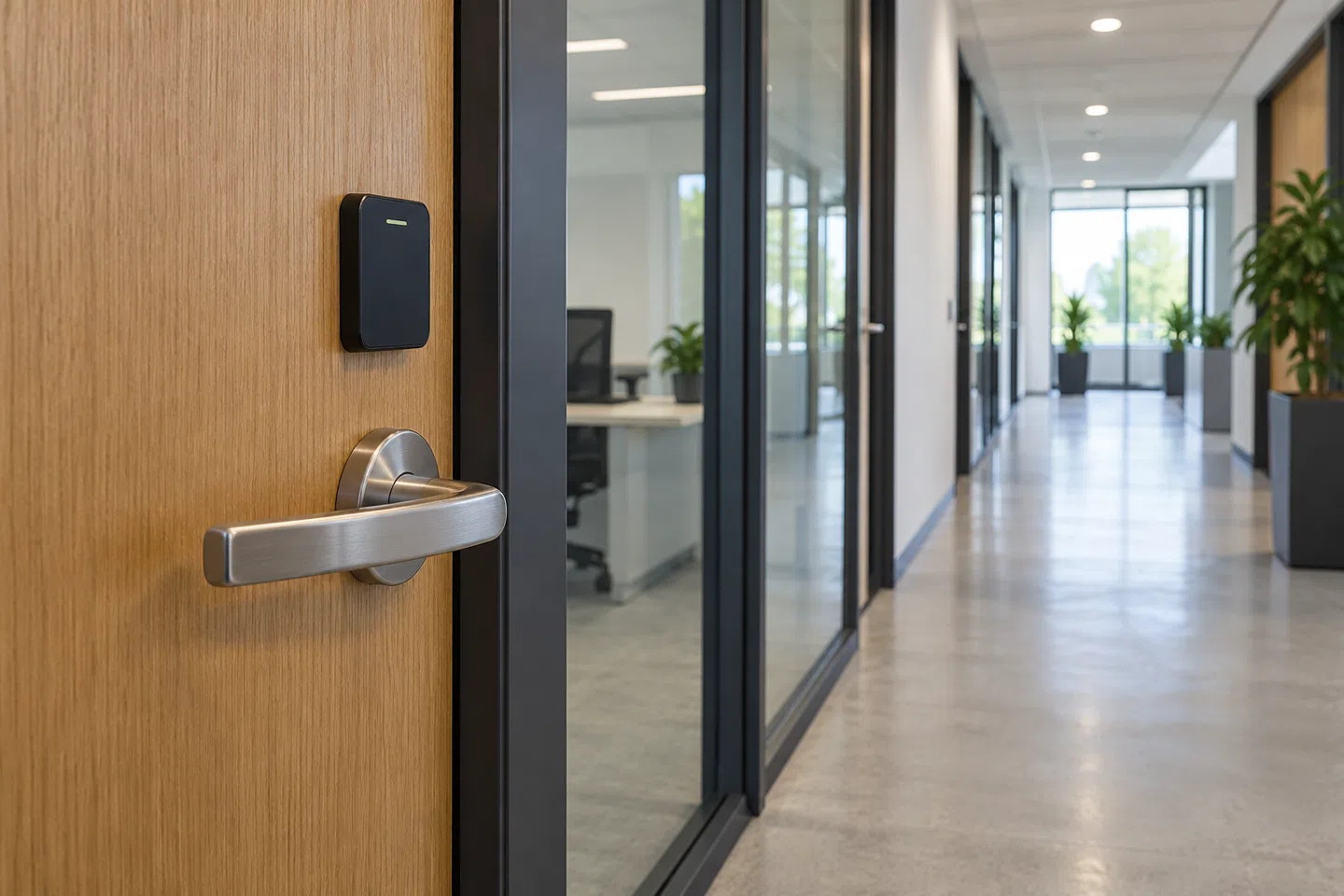
Fail-safe and fail-secure describe the electrical locking function when power is removed. They do not, by themselves, explain whether people can leave a building, whether a fire door remains correctly latched, or what every emergency input should do.
Selecting the right arrangement requires a complete door-level design. This owner’s guide explains the questions to resolve with the door hardware and fire-safety professionals. Overseas manufacturer code explanations are supporting context; applicable Indian requirements and project approvals govern an Indian installation.
In this guide
- Define the direction and function first
- Separate controlled entry from permitted exit
- Keep fire-door performance in the decision
- Distinguish alarm behaviour from supply failure
- Review backup power without hiding the final state
- Test scenarios through a coordinated safe process
- Preserve the design during maintenance
- Check maglock and electric-strike installation details
- Quick reference
- Worked example
- Frequently asked questions
1. Define the direction and function first
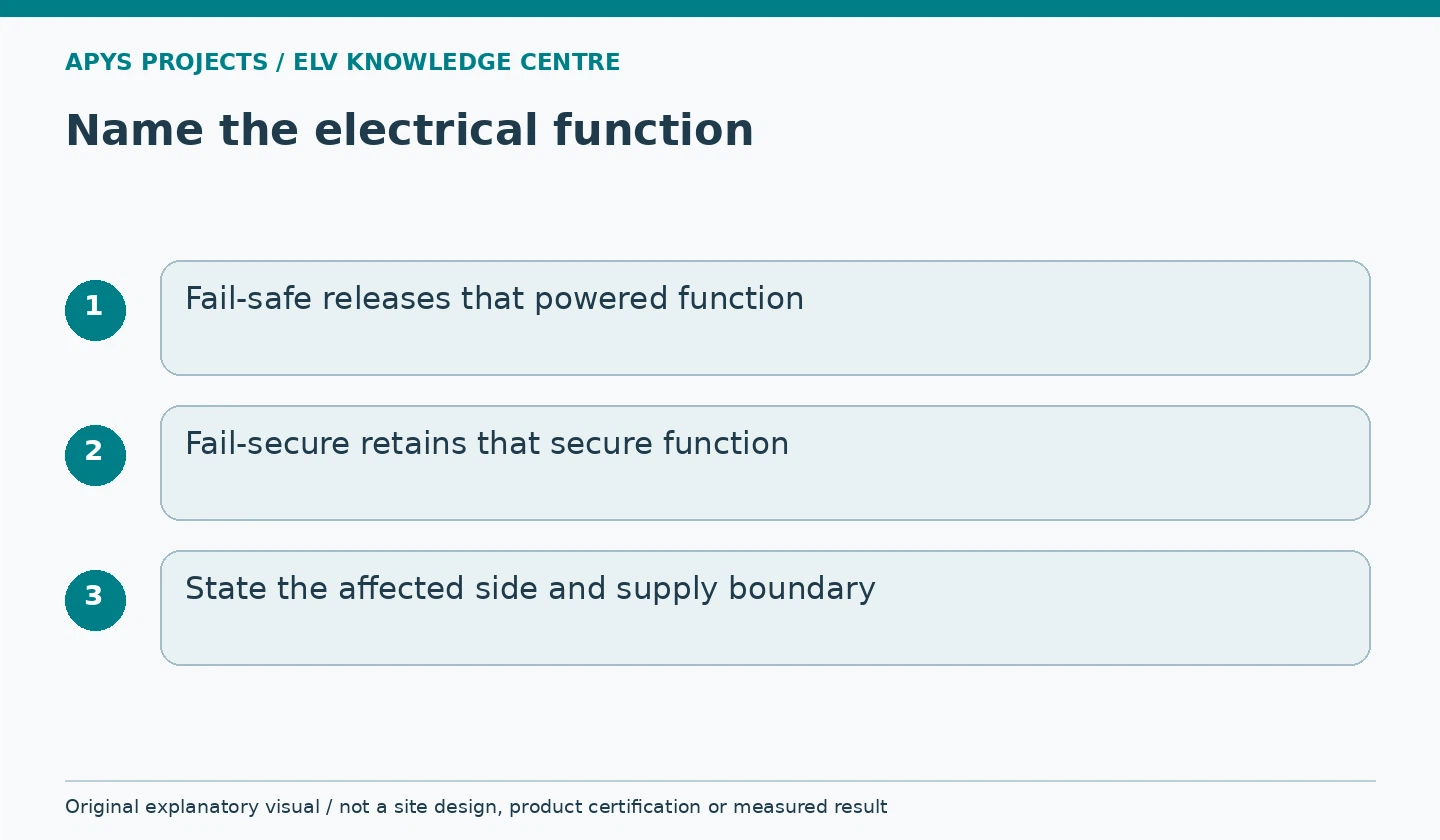
Fail-safe electrical locking releases on loss of power to that locking function. Fail-secure electrical locking remains secure on that loss. State which function and side of the opening are being described. Avoid a schedule that records only safe or secure without explaining what occupants experience.
The terms do not describe all power faults in a building. Loss of mains supply, loss of a dedicated lock circuit and exhaustion of backup power may be different events. Document the actual supply boundaries and the intended response.
2. Separate controlled entry from permitted exit
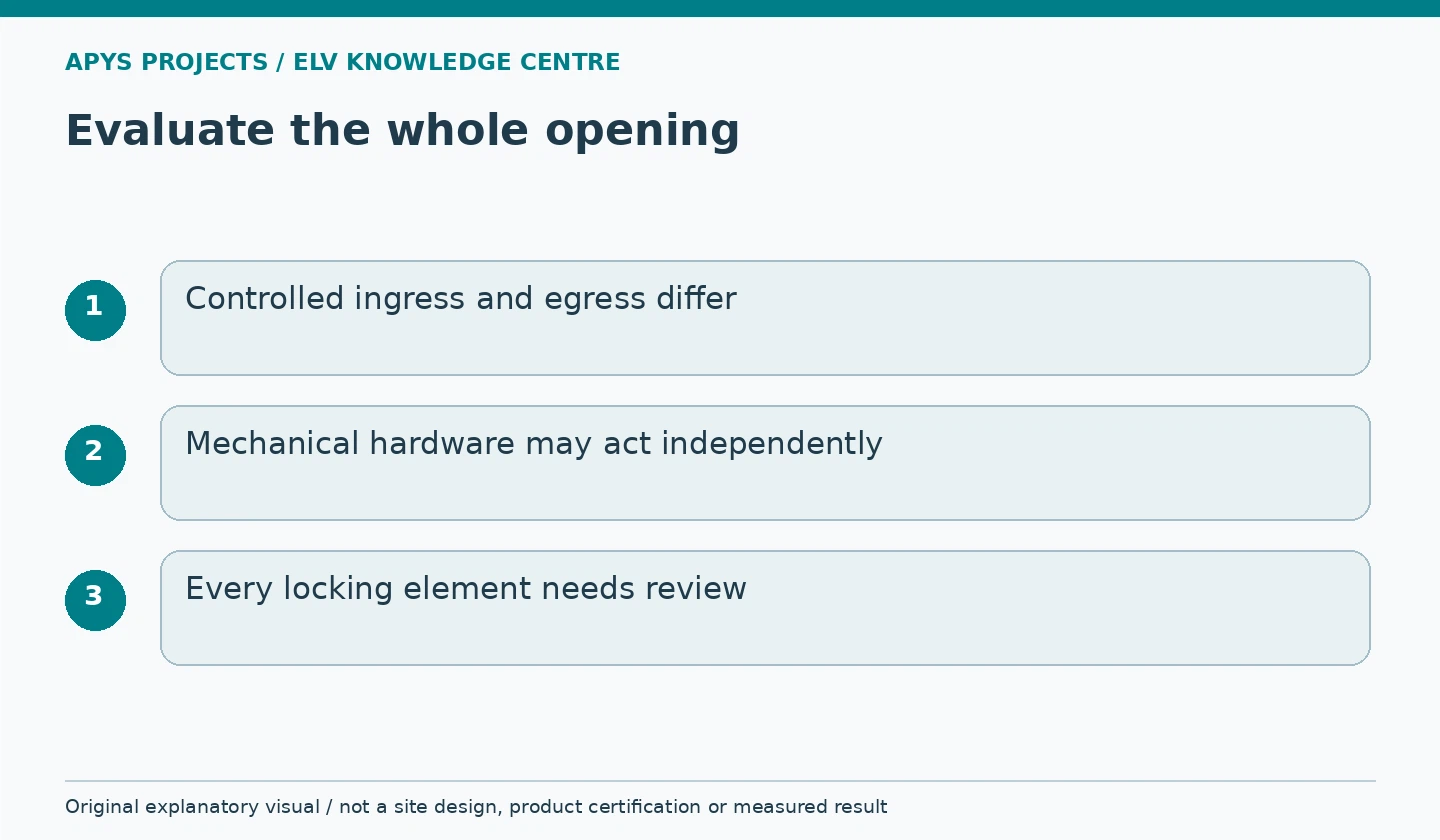
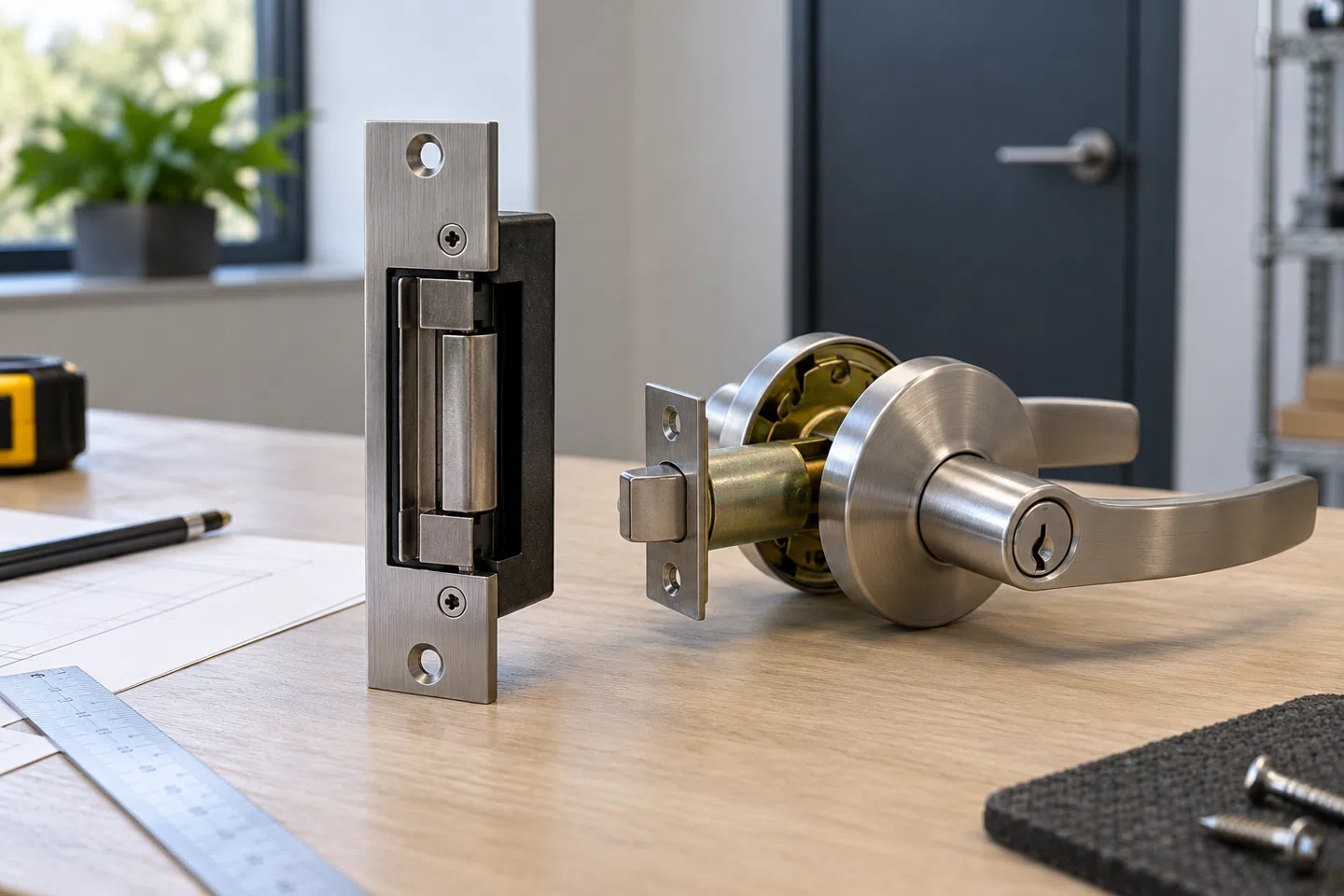
A fail-secure electric strike can restrict entry while a suitable mechanical lockset still permits exit from the occupied side. Whether that is appropriate depends on the complete door assembly and applicable requirements. A fail-secure label alone is not evidence that people are trapped.
Conversely, a fail-safe electrical component does not prove every obstruction has been removed. Other latches, bolts or unsuitable hardware may remain. Review the actual route and all locking elements rather than judging the opening from one product description.
3. Keep fire-door performance in the decision
Fire-resisting openings may need specific latching and assembly performance as well as suitable escape operation. Hardware, frame preparation and alterations must be compatible with the approved door assembly. Substituting an electric strike solely because its failure mode sounds safer can create a different problem.
Obtain the required product and assembly evidence from the responsible specialists. Do not assume an individual component marking approves every leaf, frame or installation combination. Final approval belongs to the applicable project process, not a generic comparison table.
4. Distinguish alarm behaviour from supply failure
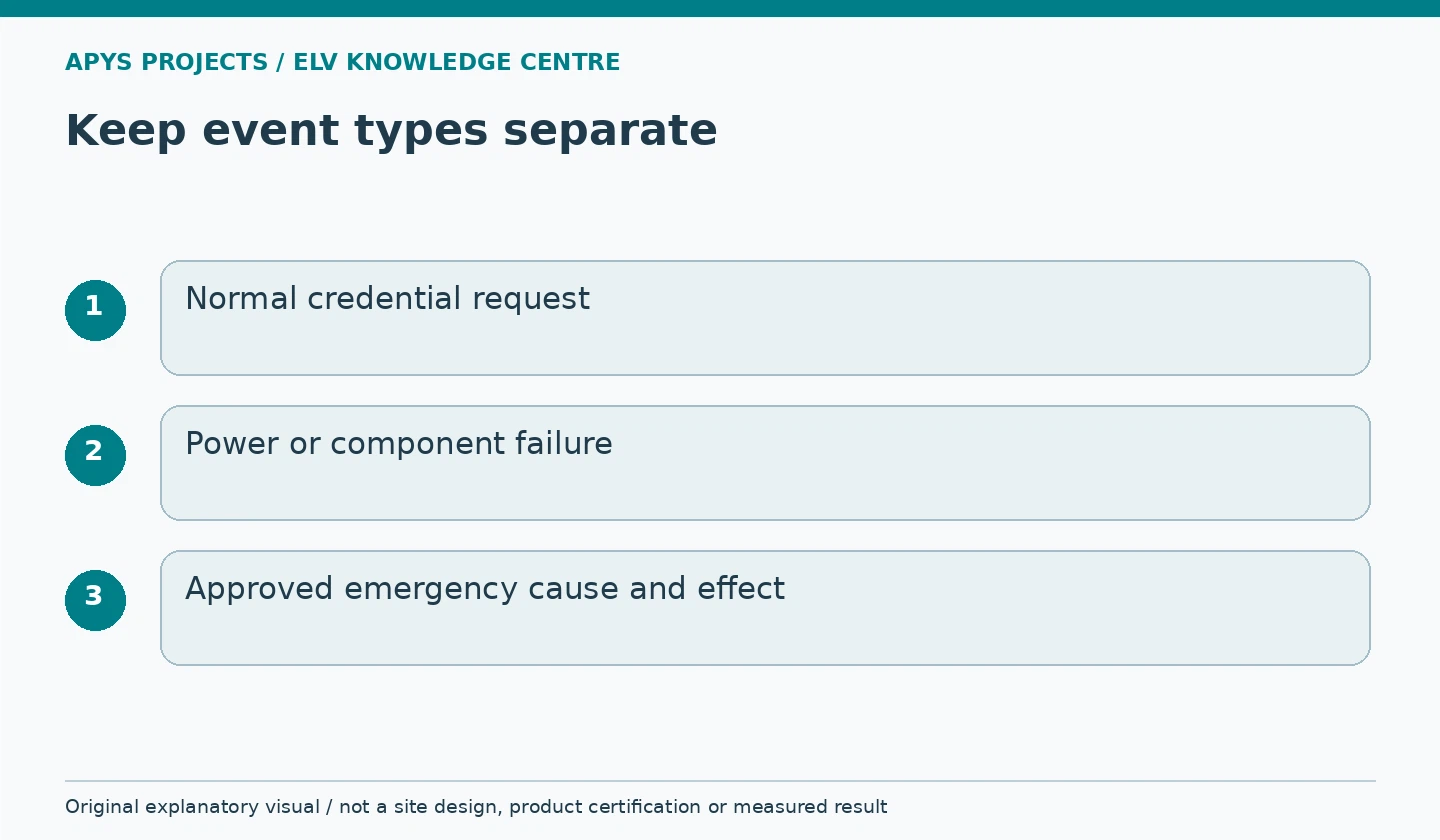
A fire-alarm input and an electrical outage are different initiating events. The approved cause-and-effect design should identify the required response, affected openings, method of operation and reset responsibilities. Do not assume that disconnecting a general controller or its network simulates every required safety function.
Hardware arrangements must meet the required means of escape independently of casual software overrides. The necessary design may vary by door use, occupancy and local approval. This article gives no universal wiring diagram or instruction to disable an existing lock.
5. Review backup power without hiding the final state
Backup power may keep access equipment operating through an interruption, but it does not remove the need for an approved eventual failure state. Identify which loads are backed up and what happens as supplies or components fail.
Avoid writing “UPS present” as the entire door response specification. Record the lock function, controller behaviour, exit provisions, monitoring and restoration sequence separately. The owner should understand how the approved arrangement behaves across normal, degraded and emergency conditions.
6. Test scenarios through a coordinated safe process
Create an agreed test matrix covering normal access, denied entry, permitted exit and the failure or emergency scenarios required by the approved design. Qualified personnel should plan tests so that occupied areas are not left without their necessary safety or security arrangements.
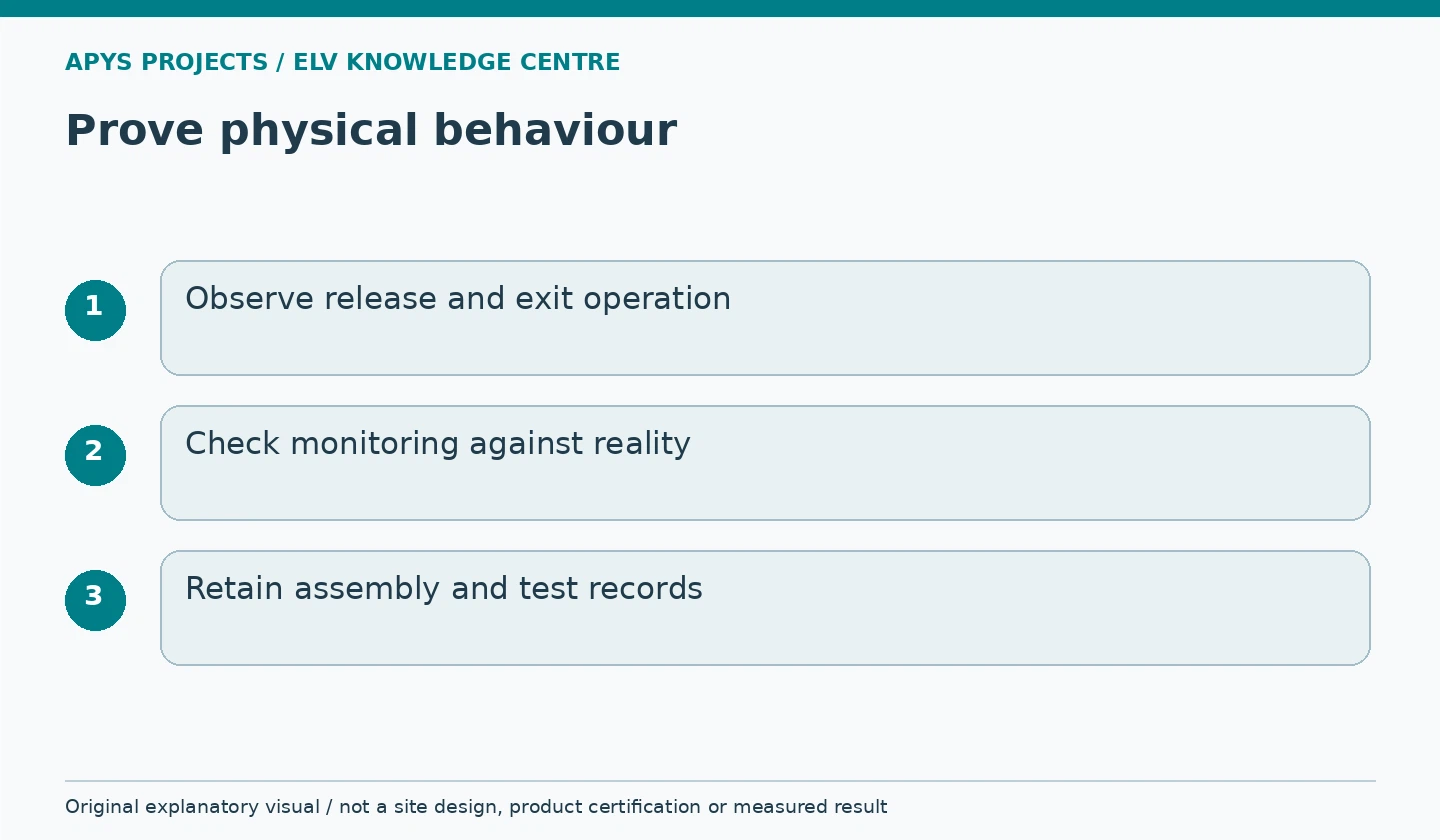
Record the observed physical behaviour, not just the software message. An unlock event in a log does not prove the door released, and a door-closed contact does not necessarily prove a latch engaged. Resolve discrepancies before acceptance.
7. Preserve the design during maintenance
Keep a door schedule identifying the complete hardware set, electrical function, supply source and approval basis. Train operators on their authorised actions and escalation process. Replacement hardware must be reviewed for compatibility rather than selected by physical size alone.
Reassess after layout changes, new tenants, altered fire strategy or additional locks. Adding an apparently simple latch can invalidate the assumptions behind the original design. Service records should show what changed and which relevant scenarios were rechecked.

8. Check maglock and electric-strike installation details
A maglock needs the magnet and armature to align and make the intended contact. Door movement, mounting quality and mechanical condition affect real operation. The frame and fixings must be suitable for the selected hardware and loads.
An electric strike releases or retains a compatible latch at the frame. Latch geometry, keeper depth, frame preparation, clearances and any preload matter. It is not a universal substitute for every existing lock, deadbolt or multipoint arrangement. Check the manufacturer’s exact compatibility information.
Quick reference
| Question | Why it matters | Record required |
|---|---|---|
| Which side is controlled? | Entry and exit are different | Door function schedule |
| Which power is lost? | Backup may mask a failure | Supply and failure matrix |
| Is it a fire door? | Latching and assembly suitability matter | Approved hardware evidence |
| What initiates emergency action? | Alarm and outage are different | Cause-and-effect record |
| What actually happened? | A log is not physical proof | Witnessed scenario result |
Worked example: applying the method
A hypothetical office storage door uses an electric strike with a mechanical lever arrangement on the occupied side. The design team reviews controlled entry, permitted exit and any fire-door requirements separately. The owner does not choose fail-safe merely because of the word safe.
A second opening has electromagnetic locking and therefore a different release arrangement. The two doors receive separate approved hardware schedules and acceptance cases. Neither design is copied to the other without reviewing its actual use, assembly and applicable requirements.
Frequently asked questions
Does fail-secure always stop people leaving?
No. Exit may be provided through suitable independent mechanical hardware; the complete approved arrangement must be assessed.
Should every door unlock when mains fails?
There is no universal answer. The approved door function, power boundaries and applicable escape requirements determine the arrangement.
Can software status certify a door is safe?
No. Required physical behaviour and assembly suitability must be verified through the project’s competent design and test process.
Related APYS ELV guides
- Access Control Wiring Explained: Readers, Exit Buttons, NO/NC Contacts and Controllers
- Smart Home Security and Automation: A Complete Planning Guide
- ELV System Guide for Societies and Commercial Buildings
Discuss an ELV requirement
APYS Projects provides ELV, electrical and networking services across India. Use our contact page to describe your site, affected systems and the outcome you need. Share sensitive configurations, credentials and test files only through an agreed protected channel.